

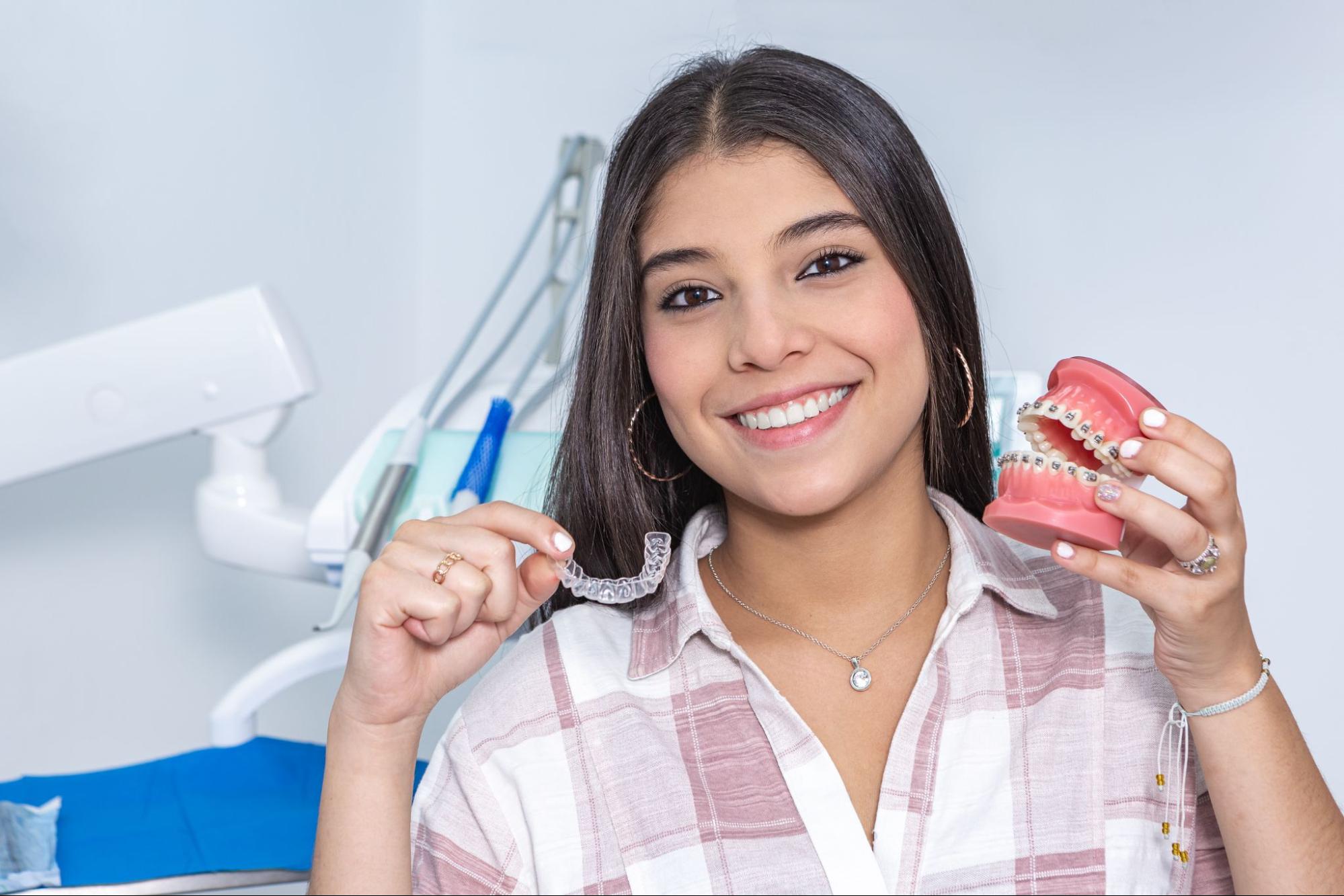
Choosing between braces and clear aligners is one of the biggest decisions you’ll make before starting treatment. Both options can perfect your smile beautifully, but they work differently, look different, and fit into your life in unique ways. At Smith & Smith Orthodontics, we’ve guided families through this exact choice for five decades. Let’s break down how each option works so you can decide what fits you best.

What Are Braces and Clear Aligners?
Braces vs. Clear Aligners comes down to two proven methods for perfecting your smile. Braces use small brackets bonded to each tooth, connected by a wire and secured with elastics. Clear aligners are removable, custom-made plastic trays worn in a series to gradually shift teeth into place.
Both apply gentle, controlled pressure that guides teeth into their new positions over time. The difference lies in how that pressure is delivered and how visible the treatment is day to day.
You’ll also find a few variations within each category. Braces come in classic metal braces or clear braces with tooth-colored ceramic brackets for a lower-profile look. Clear aligners come from several brands, including the Solventum Clarity and in-house uLab aligners we offer at Smith & Smith Orthodontics.
Whichever path you take, both are backed by decades of orthodontic research and real-world results. Dr. Brian and Dr. Lynn will help you understand which option fits your smile goals, your lifestyle, and your timeline.
How Does Each Treatment Work?
Braces and clear aligners both move teeth through steady, gentle force, but the mechanics behind each are quite different. Braces apply continuous 24/7 pressure through an archwire, while clear aligners use a sequence of custom trays that shift teeth in small, planned steps.
How Do Braces Work?
With braces, brackets are bonded to each tooth and connected by an archwire. The wire is tightened or swapped during visits every four to six weeks, which creates the steady pressure that moves teeth. Elastics (small rubber bands) can be added to correct bite alignment.
Because the hardware stays in place around the clock, braces are always working. There’s no risk of forgetting to put them in, which makes them a reliable choice for anyone who prefers a hands-off experience.
How Do Clear Aligners Work?
Clear aligners start with digital scans of your teeth. (Don’t worry, no goopy, gaggy impressions.) Those scans create a 3D model that Dr. Brian and Dr. Lynn use to plan every small movement from your starting smile to your final result.
You’ll receive a series of trays and swap to a new one every one to two weeks. Each tray is slightly different from the last, nudging teeth into place step by step. Small tooth-colored attachments may be bonded to certain teeth to help the aligners grip and move specific areas with precision.
Aligners must be worn 20 to 22 hours a day for the best results. You’ll take them out to eat, drink anything but water, and brush. Check-in visits happen less often than with braces, usually every six to ten weeks.
Benefits of Braces vs. Clear Aligners
Both options deliver straighter teeth and a healthier bite. The right choice depends on what matters most to you day to day.
What Are the Benefits of Braces?
- Handle complex cases well. Braces give orthodontists precise control over rotations, root positioning, and large tooth movements.
- No compliance needed. Since they’re fixed in place, you can’t forget to wear them.
- Reliable for all ages. Braces work equally well for kids, teens, and adults.
- Customizable look. Choose colorful elastics for fun, or go with clear braces for a lower-profile option.
- Steady progress. Because the appliance is always on, every day is a day of movement toward your final result.
What Are the Benefits of Clear Aligners?
- Nearly invisible. Most people won’t notice you’re wearing them, which is a huge plus for adults and image-conscious teens.
- Removable for meals. Take them out to eat whatever you want. No food restrictions.
- Easier to clean teeth. Brush and floss normally since there’s no hardware in the way.
- Fewer office visits. Longer stretches between check-ins means less time away from school or work.
- More comfortable surface. No brackets or wires to irritate the inside of your cheeks and lips.
- Great for active lifestyles. Easy to remove for sports, musical performances, or special events.
Both paths lead to the same destination: a straighter smile and better long-term oral health. The difference is really about which experience fits you.

Side-by-Side Comparison: Braces vs. Clear Aligners
Here’s a quick look at how clear aligners vs braces stack up across the factors most families ask about.
| Feature | Metal/Clear Braces | Clear Aligners |
|---|---|---|
| Appearance | Visible brackets and wires (clear braces are less noticeable) | Nearly invisible |
| Comfort | Possible irritation from brackets early on | Smooth plastic, generally more comfortable |
| Treatment Duration | Typically 12 to 24 months | Typically 6 to 18 months for most cases |
| Removability | Fixed in place | Removable for eating and brushing |
| Dietary Restrictions | Avoid hard, sticky, and chewy foods | None, remove to eat |
| Office Visits | Every 4 to 6 weeks | Every 6 to 10 weeks |
| Compliance Required | Minimal | High, must wear 20 to 22 hours daily |
| Best For | Complex cases, severe bite issues, extraction cases | Mild to moderate crowding, spacing, mild bite correction |
How Does Effectiveness Compare by Case Complexity?
For mild to moderate alignment issues, both options work beautifully. For complex cases involving significant rotations, major bite correction, or extractions, braces often offer the precision needed. Dr. Brian and Dr. Lynn will walk you through what fits your specific needs during your free consult. In many cases, a quick visual exam combined with digital scans is enough to point you toward the right path.
Who Is a Good Candidate for Each?
Both treatments work for teens and adults, but each shines in different situations. Here’s how to think about which path fits you.
Are You a Great Candidate for Clear Aligners?
You may be a strong fit for aligners if:
- You have mild to moderate crowding, spacing, or minor bite issues
- You’re disciplined about wearing them 20 to 22 hours a day
- You want a nearly invisible option for work or social reasons
- You play contact sports or a wind instrument
- You prefer fewer office visits
Are Braces the Better Fit for You?
Braces may be the right call if:
- You have complex rotations, severe bite issues, or need extractions
- You’d rather not worry about remembering to wear anything
- You like the idea of personalizing your look with colored elastics
- You’re treating a younger child who may struggle with compliance
Age isn’t a limiting factor for either option. Dr. Brian and Dr. Lynn, both trained at the University of North Carolina at Chapel Hill, treat family members of every age in our offices. Dr. Brian is also a Board-Certified Orthodontist, which means he’s gone above and beyond the standard requirements through the American Board of Orthodontics. Our Sanford office welcomes families from Broadway, Siler City, and Pittsboro, and our Bayboro office serves Pamlico County and nearby communities.
The best way to know for sure? Schedule a free consult at Smith & Smith Orthodontics. We’ll do digital scans, talk through your goals, and recommend what truly fits you. Remember: our treatments fit you. not the other way around.

Frequently Asked Questions
Why do people quit clear aligner treatment?
The most common reason is compliance. Aligners only work when worn 20 to 22 hours a day, and some people struggle to stay consistent. Others find they lose trays or skip wearing them during busy periods. If you’re worried about compliance, braces may be the more reliable choice for you. Setting a daily routine, like putting trays back in right after meals, helps most families stay on track.
How long does each treatment take on average?
Braces typically take 12 to 24 months, while clear aligners often finish in 6 to 18 months for straightforward cases. Complex bite corrections may extend either timeline. Dr. Brian and Dr. Lynn will give you a personalized estimate at your free consult based on your specific needs. Growth stage, bite complexity, and how consistently you follow the plan all shape the final timeline.
Can I switch between braces and aligners mid-treatment?
Yes, in some cases. A combination approach is sometimes used when a complex issue needs to be addressed first with braces, followed by aligners for finishing touches. This isn’t common, but it’s an option your orthodontist can discuss if your treatment needs change. We’ll always talk through the pros and cons before adjusting the plan.
Do I need a retainer after either treatment?
Absolutely. Retainers are essential after any orthodontic treatment to keep your teeth in their new positions. Without one, teeth naturally try to shift back over time. We’ll fit you with a custom retainer and walk you through how often to wear it to protect your results. Think of a retainer as the final step that locks in all the work you’ve already put in.
Which is more uncomfortable, braces or aligners?
Both can cause mild soreness, especially after adjustments or when switching to a new aligner tray. Braces may cause occasional irritation from brackets rubbing against cheeks and lips, especially in the first week or two. Aligners typically feel smoother, though you may notice pressure for a day or two with each new tray. The soreness is temporary with both, and most families find it fades quickly as the mouth adjusts. Our team at Smith & Smith Orthodontics is always a phone call away if anything feels off during your time with us.