

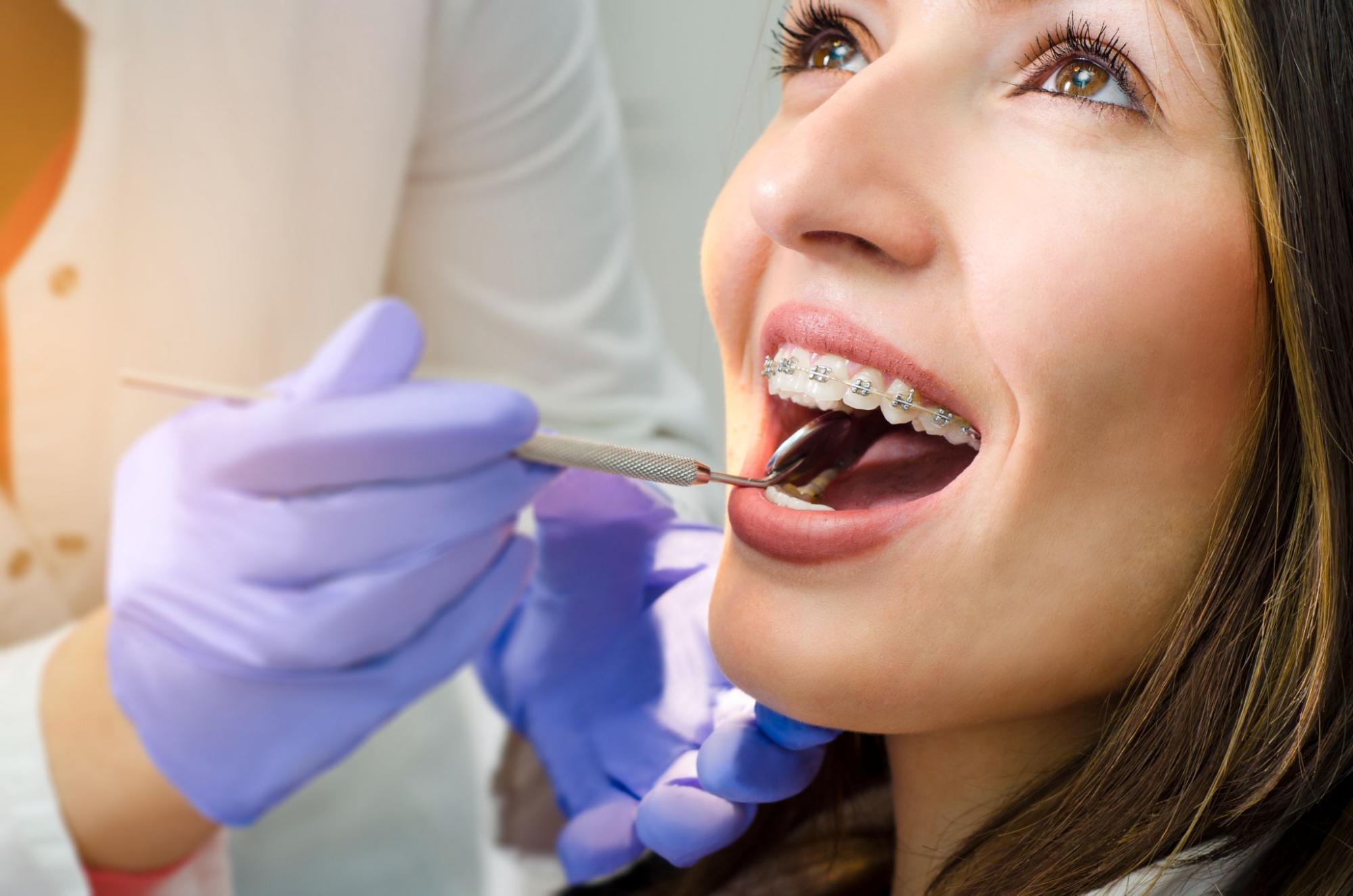
The best type of braces for adults depends on case complexity, visibility preference, and budget. Four main options stand out:
- Clear aligners work well for mild-to-moderate cases.
- Metal braces handle complex issues at the lowest cost.
- Clear braces offer a discreet look with strong results.
- Lingual braces hide completely behind your teeth.
Adult orthodontics has come a long way. Today’s options fit your lifestyle, your career, and your personal preferences. You don’t have to choose between effective treatment and looking professional at work.
According to the American Association of Orthodontists, a meaningful share of orthodontic patients today are adults, and that share keeps growing as more people realize it’s never too late to perfect your smile. Dr. Brian D. Smith, board-certified orthodontist, and Dr. Lynn H. Smith can help you weigh visibility, cost, and treatment length during a free consultation.
How Adult Braces Work: Treatment Process Overview
Getting braces as an adult follows a clear set of steps from start to finish. Most adults appreciate knowing the rhythm of treatment before they begin, so here is how it unfolds.
- Initial Consultation
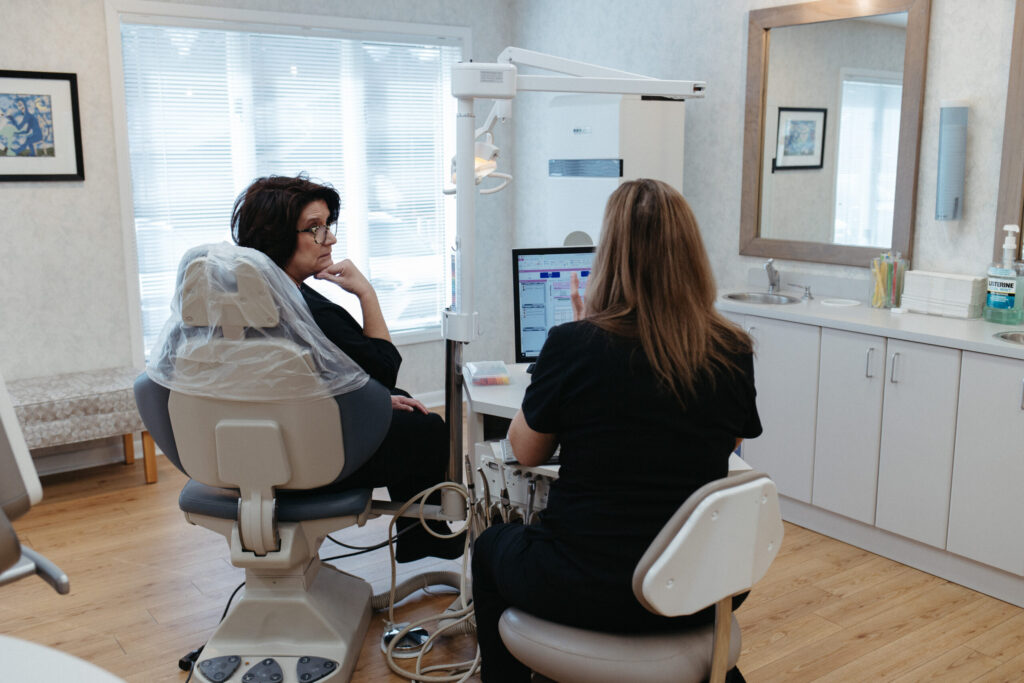
Your first visit includes digital scans and X-rays. No goopy, gaggy impressions here. These images give your orthodontist a complete picture of your teeth, jaw, and bite alignment.
- Custom Treatment Plan
Using your scans, Dr. Brian or Dr. Lynn creates a treatment plan built around your teeth and goals. This plan maps out exactly how your teeth will move and how long treatment should take.
- Active Treatment Phase
This is when the real work happens. Depending on your case, active treatment lasts anywhere from 6 to 30 months. You’ll visit the office every 4 to 8 weeks for adjustments or to pick up new aligner trays.
- Retention Phase
Once your teeth are straight, you’ll wear a retainer to keep them in place. This phase is just as important as the active phase. Without proper retention, teeth can shift back over time.
One thing to know: adult bone is denser than a teenager’s. This means tooth movement may take slightly longer. The results, though, are just as beautiful and just as lasting. Financing options are available to help fit treatment into your budget.
Benefits of Getting Braces as an Adult
Straightening your teeth as an adult brings real, lasting benefits. Better oral health and improved bite function are the clinical wins. Boosted confidence, easier daily care, and access to discreet modern options round out why so many adults are choosing treatment now. Each one supports a healthier, happier smile.
How Do Braces Improve Oral Health?
Straight teeth are easier to brush and floss. When teeth overlap or crowd together, plaque hides in spots your toothbrush can’t reach. Proper alignment reduces your risk of cavities and gum disease, and it makes your daily brushing routine more effective. Food particles don’t get trapped as easily, and your gums stay healthier.
Can Braces Fix Bite Problems?
Yes. A malocclusion puts strain on your jaw muscles and joints. Over time, this can cause headaches, jaw soreness, and uneven tooth wear. Correcting your bite takes pressure off these areas and helps your teeth function the way they were meant to.
How Do Braces Boost Confidence?
Many adults hide their smile in photos or during conversations. After treatment, patients often tell us they smile more freely. That confidence shows up at work, in relationships, and in everyday moments. The team at Smith & Smith Orthodontics has seen this transformation in family after family.
What Discreet Options Are Available Today?
Today’s braces aren’t like the ones you remember from middle school. Clear aligners are nearly invisible. Ceramic brackets blend with your teeth. You can perfect your smile without everyone knowing.

Comparing the 4 Best Types of Braces for Adults
Each option has strengths that make it ideal for certain situations. Here’s how the best type of braces for adults stack up against one another.
What Are Metal Braces?
Metal braces remain the most versatile option. They handle everything from minor crowding to severe bite issues. Today’s brackets are smaller and more comfortable than previous generations.
Best for: Complex cases, significant bite correction, budget-conscious adults
Considerations: Most visible option, requires dietary adjustments
Clear (Ceramic) Braces: A Lower-Profile Choice
Clear braces work just like metal braces, but the brackets are tooth-colored. They blend in with your smile while still providing strong, reliable results. Many working professionals find this option strikes a great balance.
Best for: Adults who want effective treatment with a lower profile, working professionals
Considerations: Slightly higher cost than metal, brackets can stain if not cared for properly
Lingual Braces: Hidden Behind the Teeth
If complete invisibility is your top priority, lingual braces might be your answer. Lingual braces attach to the back of your teeth, so from the front, no one can see them at all. They’re custom-made for your mouth.
Best for: Adults who need complete discretion, public speakers, performers
Considerations: Higher cost, may affect speech initially, harder to clean
Clear Aligners: Removable and Nearly Invisible
Clear aligners are removable trays that gradually shift your teeth. You switch to a new set every one to two weeks. They’re nearly invisible when worn.
Best for: Mild-to-moderate alignment issues, adults who want flexibility, those who don’t want dietary restrictions
Considerations: Requires discipline to wear 20-22 hours daily, not ideal for complex cases
Quick Comparison Table
| Feature | Metal | Clear (Ceramic) | Lingual | Clear Aligners |
|---|---|---|---|---|
| Visibility | Most visible | Low visibility | Hidden | Nearly invisible |
| Cost Range | Lowest | Mid-range | Higher | Mid-range to Higher |
| Treatment Time | 12-30 months | 12-30 months | 18-36 months | 6-24 months |
| Case Complexity | All cases | All cases | Moderate-complex | Mild-moderate |
| Removable | No | No | No | Yes |
| Comfort | Good | Good | Adjustment period | Very comfortable |
Cost Factors for the Best Type of Braces for Adults
Understanding what affects cost helps you plan for treatment. Several factors determine your total cost, and orthodontic fees vary by region and by office.
How Does the Type of Braces Affect Cost?
Metal braces typically cost the least. Clear braces fall in the middle. Lingual braces and clear aligners often cost more due to customization and materials. Pricing varies by office, so the most reliable figure for your case comes from a personal quote.
Does Case Complexity Change the Price?
Yes. A straightforward alignment case costs less than correcting a severe bite issue. More complex cases require more visits and longer treatment times.
How Does Treatment Length Influence Cost?
Longer treatments mean more office visits and more materials. A 12-month case will generally cost less than a 30-month case.
What About Insurance Coverage?
Many dental insurance plans cover a portion of adult orthodontic treatment. Check with your provider to understand your benefits. Even partial coverage helps lower what you pay out of pocket.
What Payment Options Are Available?
Smith & Smith Orthodontics offers flexible payment plans. CareCredit financing is also available. HSA and FSA funds can often be used for orthodontic care.
The clearest way to know your exact cost is to schedule a free consult. You’ll get a treatment plan and clear pricing upfront.
Who Is a Good Candidate for Adult Braces?
Most adults with healthy teeth and gums can benefit from orthodontic treatment. Smith & Smith Orthodontics welcomes adults of all ages. Here’s what makes someone a good candidate.
Do You Have a Healthy Foundation?
Your teeth and gums need to be in good shape before starting treatment. If you have active gum disease, your dentist will help you get it under control first. Once your oral health is stable, you can begin.
Do You Have Alignment or Bite Issues?
Whether your concerns are mild or severe, treatment options exist. Crowding, spacing, overbites, underbites, crossbites: all can be addressed with the right approach.
Are You Ready to Commit to the Process?
Braces require regular visits and following care instructions. Clear aligners need to be worn consistently. Adults who commit to the process see the best results.
What Lifestyle Factors Matter?
Your daily life helps determine which option fits best. Do you speak publicly for work? Lingual braces or clear aligners might suit you. Want something you don’t have to think about? Metal or clear braces could be the answer.
Have You Had Orthodontic Treatment Before?
Had braces as a teen but your teeth have shifted? You’re not alone. Many adults return for a second round of treatment. Often, clear aligners can correct minor relapse quickly.
A free consult with Dr. Brian D. Smith or Dr. Lynn H. Smith will answer all your questions. They’ll examine your teeth, discuss your goals, and recommend the best path forward for patients in Sanford, Bayboro, and beyond.

Frequently Asked Questions About Adult Braces
Am I Too Old to Get Braces?
No. There’s no age limit for orthodontic treatment. As long as your teeth and gums are healthy, braces can work for you. Adults in their 40s, 50s, 60s, and beyond successfully perfect their smiles every day.
How Long Do Adult Braces Take?
Most adult cases take between 12 and 24 months. Simple alignment issues may finish faster. Complex bite corrections can take longer. Your orthodontist will give you a realistic timeline during your consultation.
Are Clear Aligners as Effective as Metal Braces?
For mild-to-moderate cases, clear aligners deliver excellent results. Complex cases with significant bite issues may need metal braces for optimal correction. Dr. Brian and Dr. Lynn will recommend the most effective option for your specific situation.
Are Adult Braces Uncomfortable?
You may feel some pressure after adjustments or when starting new aligner trays. This pressure is typically mild and fades within a few days. Soft foods and over-the-counter relievers help during these adjustment periods. Most adults find the sensation easy to handle.
Will Braces Affect My Work or Social Life?
Today’s options are designed with adult lifestyles in mind. Clear aligners are nearly invisible. Ceramic brackets blend in. Many adults find their coworkers don’t even notice they’re in treatment.
Can I Get Braces If I Had Them as a Teen?
Absolutely. Teeth can shift over time, especially if retainers weren’t worn consistently. A second round of treatment is common and often shorter than the first. Clear aligners are particularly popular for these cases.
Choosing the best type of braces for adults comes down to matching the option to your case, your visibility preference, and your budget. Metal braces remain the most versatile and budget-friendly. Clear braces offer a lower profile. Lingual braces stay completely hidden. Clear aligners give you removable flexibility for milder cases. With the right information and a personal exam, the path that fits your life will become clear.