


A digital scan visit is a short 5 to 10 minute appointment where a handheld wand photographs your teeth and bite to build a 3D model on screen. No putty, no trays, no gagging. The file it creates becomes the blueprint for clear aligners, braces planning, and retainers.
Here’s what to expect during your digital scan visit at Smith & Smith Orthodontics.
What Is a Digital Scan Appointment?
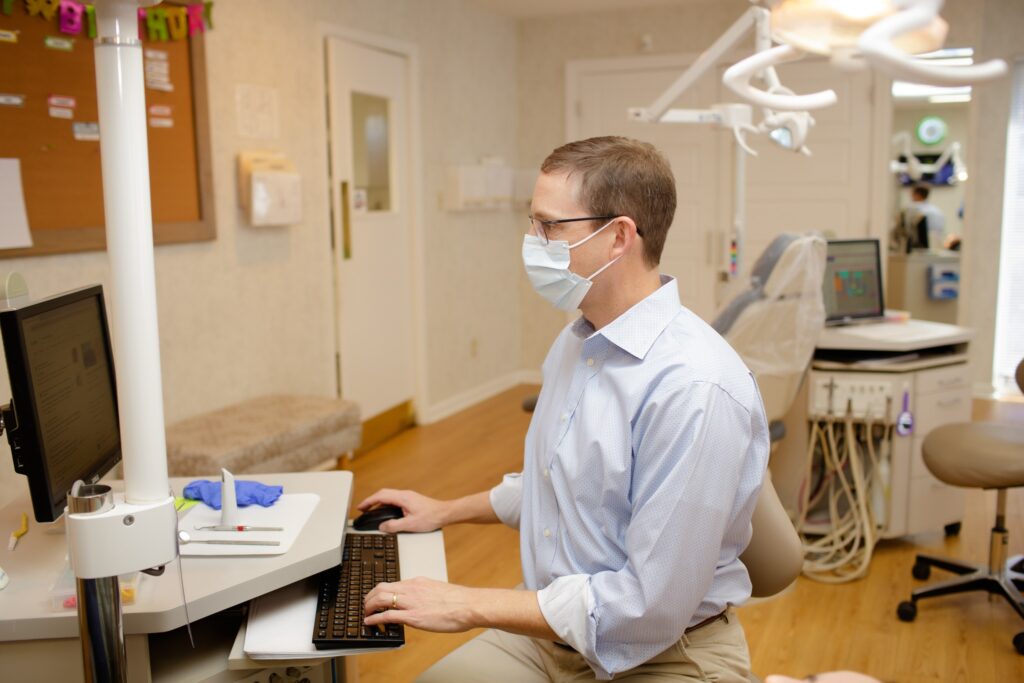
A digital scan appointment is a records visit where a small camera replaces the old impression tray. Nothing hardens in your mouth, nothing has to be held still for minutes at a time, and the finished model shows up on a screen beside you while you sit there.
The wand is about the size of an electric toothbrush. It never cuts, pokes, or needs numbing. As Dr. Brian or Dr. Lynn moves it around your mouth, thousands of images stitch together on a chairside monitor, and you get to watch your own smile appear in 3D. Most people find that part surprisingly fun.
Digital scans replace the old goopy trays completely. Instead of biting into cold material and waiting for it to set, you simply relax while the wand does the work. If your cheek gets tired or you need a break, we pause. Simple as that.
That 3D file does a lot of work behind the scenes. We use digital scans at Smith & Smith Orthodontics for clear aligner design, braces planning, retainer fabrication, and progress comparisons throughout your treatment. Because everything lives in a digital record, we can pull up your original model years later and compare it to where your teeth are today.
Nothing about this visit asks much of you. There’s no needle, no numbing, and nothing to swallow or hold in place. Families who sat through impressions years ago usually notice the difference within the first few seconds of the scan, and children who have never had a records visit tend to treat the whole thing like a video game.
What to Expect During Your Digital Scan Appointment: Step by Step
Your scan visit follows five simple steps: check-in and a quick review of your goals, a gentle drying of your teeth, scanning of the upper arch, lower arch, and bite, real-time model building on the monitor, then a chairside review of the finished 3D image. Most scans wrap up in under 10 minutes.
Here’s how each step plays out.
- Check-in and questions. Before anything touches your teeth, we talk. What bothers you about your smile? Are you leaning toward clear aligners, clear braces, or metal braces? Your answers shape what we look for during the scan.
- A quick prep. Your teeth get gently dried with a puff of air so the camera reads surfaces clearly. Soft cheek retractors hold your lips out of the way. They feel odd for a moment, then you forget about them.
- Scanning, arch by arch. The wand glides slowly across your upper arch, then your lower arch. Last comes the bite scan, where you close your teeth together while we capture how your top and bottom arches meet. That final step tells us a lot about malocclusion.
- The model builds live. Software stitches the incoming images into a single 3D model as we go. If a spot needs another pass, we rescan just that section in seconds. Nothing gets thrown out and started over.
- Your review, and what comes next. Dr. Brian or Dr. Lynn spins the model on screen with you, points out crowding, spacing, or bite concerns, and walks through your options. Some visits include a simulation of your projected result, which is a great moment for teens and parents alike.
You can talk during most of the scan. Swallow whenever you need to. If you feel a tickle in the back of your throat, raise a hand and we stop.
Why Digital Scans Beat Traditional Impressions
Digital scans beat impressions at Smith & Smith Orthodontics by offering greater comfort, better accuracy, a faster visit, and permanent digital records. Nothing fills your mouth, nothing has to harden, and a spot that needs another pass takes seconds to redo rather than a full tray of new material.
Comfort is the headline, but accuracy is the real win. Digital scans give us a cleaner, more detailed record of your teeth than putty ever could, and that shows up in how well your aligners and retainers fit.
What you gain with a digital scan:
- No gag reflex triggers. Nothing fills your mouth, nothing tastes like chalk, and nothing has to sit and harden.
- A faster visit. Most scans finish in under 10 minutes, including the bite capture.
- Better-fitting appliances. Precise digital data means aligners, retainers, and appliances that seat properly the first time.
- Instant retakes. If one section needs another pass, we rescan that area in seconds instead of redoing a full tray.
- Permanent digital records. Your file stays on hand for progress comparisons and replacement retainers down the road.
- A look at the finish line. Some scans support a smile simulation, so you see a projected result before you commit.
Kids especially notice the difference. So do adults who remember impressions from decades ago and expect the worst.
Digital Scan vs. Traditional Impressions: Side by Side
Digital scans are faster, more comfortable, and more accurate than traditional impressions. A scan takes under 10 minutes, uses a handheld wand rather than putty-filled trays, and produces a digital file that never shrinks or distorts. Impressions still work in select cases, but they take longer and are harder to correct.
Both methods aim for the same thing: an accurate record of your teeth. They get there very differently.
| Factor | Digital Scan | Traditional Impressions |
|---|---|---|
| Comfort | Handheld wand, nothing fills the mouth | Putty-filled trays pressed onto the teeth |
| Time required | Continuous scan, usually under 10 minutes total | Roughly 3 to 5 minutes of set time per arch |
| Accuracy | Digital capture with no material shrinkage | Can distort if material shrinks or the tray shifts |
| Retakes | Rescan one section in seconds | Mix new material, redo the entire arch |
| Storage | Digital file kept permanently | Physical models stored or shipped to a lab |
| Your experience | You watch the model build on screen | You wait with a full mouth and breathe carefully |
| Lab turnaround | Files sent electronically, often the same day | Models packed and shipped |
Material shrinkage is the quiet issue with putty. A tray that shifts slightly, or material that pulls as it sets, can throw off the fit of a finished retainer. Digital capture removes that variable.
Physical impressions still have a place in rare situations. Certain lab-fabricated appliances, heavy saliva flow, or unusual anatomy may call for a traditional impression. When that happens, Dr. Brian or Dr. Lynn will explain why before we start.
Who Can Have a Digital Scan?
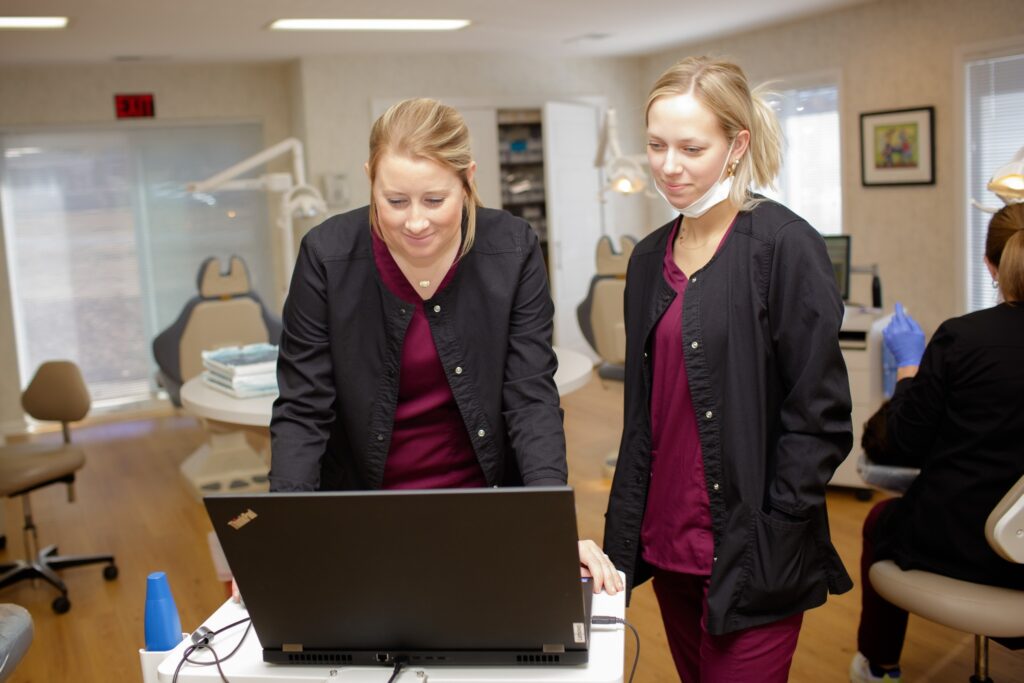
At Smith & Smith Orthodontics, digital scanning suits children, teens, and adults, and it’s often the best option for people with a strong gag reflex who dreaded impressions in the past.
Digital scans work well for:
- Kids and teens, including younger children being evaluated for early treatment
- Adults with existing restorations, since the scanner reads crowns, bridges, implants, and fillings without trouble
- Anyone already in braces, whether for a retainer, a mid-treatment adjustment, or an appliance
- Anxious visitors, because the wand uses light-based imaging rather than radiation
- Retainer replacements, using either a fresh scan or your stored digital file
A few things are worth handling first. Loose brackets, orthodontic wax still stuck to an appliance, and untreated decay can all affect the scan, so let your team know ahead of time. Sore spots matter too. We adjust our approach around them rather than pushing through.
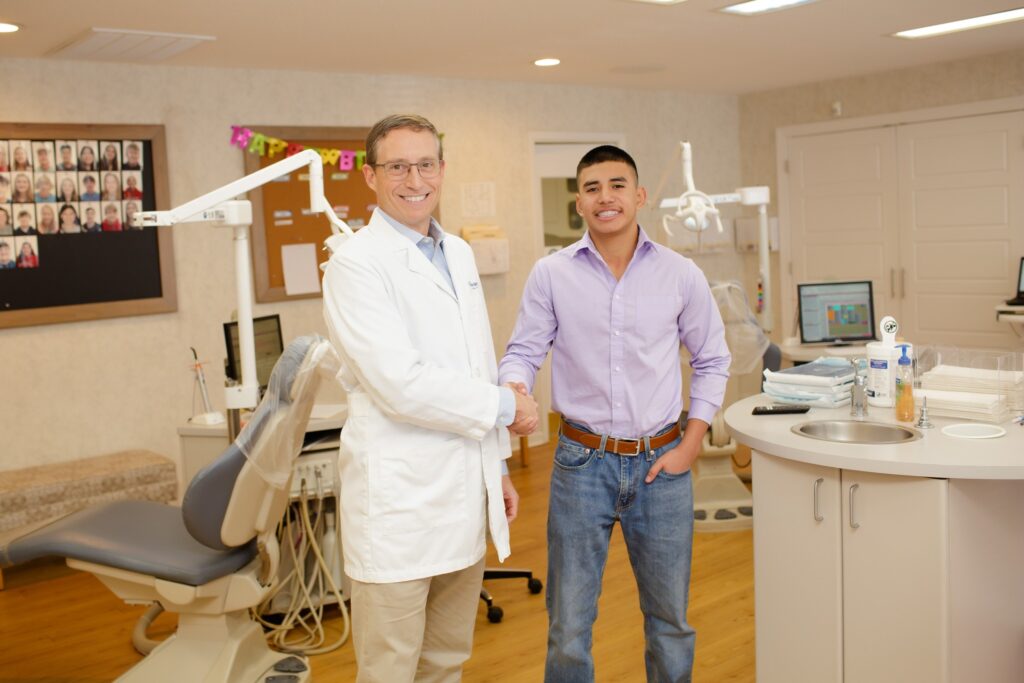
Dr. Brian D. Smith is a board-certified orthodontist, and he cares for families alongside Dr. Lynn H. Smith. Our family serves your family, and we’ve been creating beautiful smiles for 50 years.
Both doctors review your finished model with you at the same visit, so you leave understanding what the scan showed and what the options are. A free consult with a digital scan gives you real information to work from, whether you move forward now, later, or not at all.
Frequently Asked Questions About Digital Scan Appointments
How long does a digital scan take?
Most digital scans take 5 to 10 minutes total, covering the upper arch, lower arch, and a bite scan. Your full visit runs a bit longer because of check-in and the chairside review afterward. Kids and first-timers sometimes take an extra minute or two, and that’s perfectly fine.
Does a digital scan hurt?
No. The wand doesn’t cut, poke, or press into your gums, and no numbing is needed. The most you’ll feel is the cool tip touching a tooth surface and the cheek retractors holding your lips back. Both sensations fade from your mind within a minute.
Is the scanner safe?
Yes. Intraoral scanners capture images using visible light or laser imaging, not X-ray radiation. That makes them a comfortable choice for children, teens, and anyone who prefers to limit imaging exposure. Digital X-rays are a separate tool we use only when diagnosis calls for them.
Do I need to prepare for my scan?
Brush and floss before you come in, since a clean surface scans more clearly. Skip nothing else. Just mention any loose brackets, broken appliances, or sore spots when you arrive, and let us know if you have a sensitive gag reflex so we can plan around it.
Can I see my results the same day?
Yes. Your 3D model appears on the chairside monitor as the scan happens, so there’s no waiting on a lab. Dr. Brian or Dr. Lynn can rotate the model, zoom in on crowding or spacing, and talk through your options during that same visit.
What if I gag easily?
Tell your team before we begin. A digital scan appointment can be paused, segmented, and restarted at any point, which is a major advantage over putty trays that had to stay in place until they set. We scan a small area, give you a breath, then continue. Most people who dreaded impressions get through a digital scan without issue.