


If you’ve been researching braces options, you’ve probably come across the term self-ligating brackets. So, what are self-ligating braces, exactly? They’re a modern style of braces that skip the tiny rubber bands used on standard brackets. At Smith & Smith Orthodontics, we’ve watched this technology grow over the past couple of decades, and today it’s one of the most popular options for families looking for an efficient, low-maintenance treatment.
Let’s break down how they work and whether they might be the right fit for your smile.
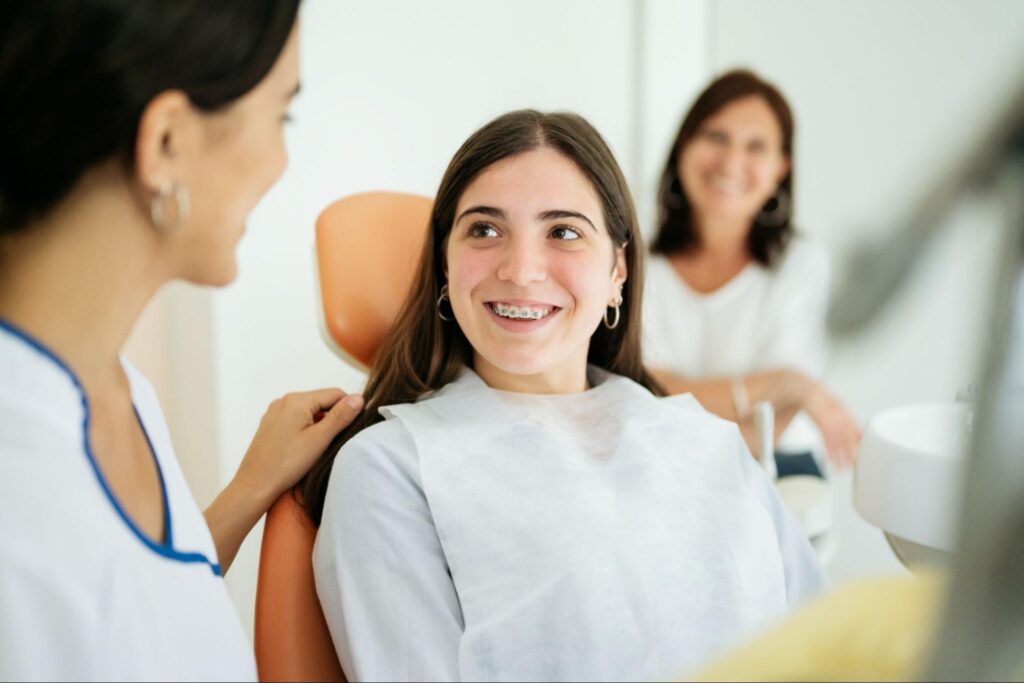
What Are Self-Ligating Braces?
Self-ligating braces are brackets with a built-in clip or sliding door that holds the archwire in place, eliminating the need for elastic ties or metal ligatures. The wire snaps into each bracket and stays secured by the small door, which means less friction and fewer parts to swap out at each visit.
Standard metal braces use tiny elastic O-rings (those colorful bands kids love to pick) or small metal wires to hold the archwire to each bracket. Self-ligating brackets skip the ties entirely.
There are two main types:
- Passive self-ligating brackets hold the wire loosely, allowing freer movement during the early phase of treatment.
- Active self-ligating brackets press the wire more firmly against the bracket for precise finishing and tooth control.
Popular systems include the Damon System, Empower, and In-Ovation. Smith & Smith Orthodontics features the Empower® self-ligating braces from American Orthodontics, the only self-ligating braces made in the U.S. You can get self-ligating brackets in traditional metal or in clear ceramic for a more discreet look. At Smith & Smith Orthodontics, we help you weigh the choices during your free consult so your treatment feels right from day one.
How Do Self-Ligating Braces Work?
The mechanics are simpler than they sound. Each bracket has a tiny built-in clip or sliding door. Dr. Brian and Dr. Lynn open the door, slide the archwire into the slot, and close it. That’s it. No elastics to wrap around each bracket, no metal ties to twist into place.
Because there’s no rubber band squeezing the wire down, there’s less friction between the archwire and the bracket. Lower friction can mean teeth glide into position more smoothly, especially during the early alignment stage.
Here’s what the flow usually looks like from start to finish, step by step:
- Bonding visit. Brackets are placed on each tooth using a safe dental adhesive, and the first archwire is secured inside each bracket’s clip.
- Early alignment and wire changes. With passive brackets, the loose fit encourages gentle movement as crooked teeth begin to line up. Over the course of your smile journey, we move you through a sequence of archwires, each one slightly stiffer or shaped differently to guide the teeth.
- Finishing phase. Active brackets (or final wires in a passive system) engage the teeth more firmly to perfect rotations, torque, and bite details. Because there are no elastic ties to remove and replace at each check-in, these visits are usually shorter than they would be with standard braces.
- Debond and retainer. Once your smile is where it needs to be, we remove the brackets and fit you with a custom retainer to protect your new look for the long haul.
Most families find the shorter visits are a real win. Less chair time means less disruption to school, work, and busy weeknight schedules around Sanford, Broadway, Bayboro, and Pittsboro.
Benefits of Self-Ligating Braces
Our families choose self-ligating brackets for several reasons. Here’s what you can expect:
- Shorter adjustment visits. With no elastic ties to swap out one by one, check-ins are often quicker. Great news for busy teens and working adults.
- Easier brushing and flossing. Fewer small components around each bracket means fewer spots for plaque and food to hide. Oral hygiene is simpler to keep up with.
- A smoother, lower-profile design. The sliding door creates a cleaner bracket shape, which feels more comfortable against the lips and cheeks.
- Reduced friction. Lower friction between the wire and bracket translates to gentler forces on your teeth, which most families describe as a kinder day-to-day experience.
- Fewer total visits in many cases. Some treatment plans allow for slightly longer intervals between adjustments.
- Clear options available. If you want something less noticeable, ceramic self-ligating brackets blend in with your natural tooth color.
- No elastic wear or breakage. You won’t have to worry about a stretched-out tie causing a bracket to lose its grip on the wire.
- Great hygiene for growing families. For kids and teens still learning to brush thoroughly, the simpler bracket shape helps keep gums healthier through treatment.
That said, some families actually miss the chance to pick colorful elastics every month. If self-expression during treatment matters to you or your child, that’s worth factoring into the conversation.
Self-Ligating vs Traditional Braces
Both styles can create beautiful results. The real difference is in the mechanics and the day-to-day experience. Here’s a side-by-side look:
| Feature | Self-Ligating Braces | Traditional Metal Braces |
|---|---|---|
| Wire attachment | Built-in clip or sliding door | Elastic O-rings or metal ligatures |
| Friction | Lower friction between wire and bracket | Higher friction from elastic ties |
| Visit length | Typically shorter adjustments | Standard adjustment time |
| Hygiene | Fewer components, easier to clean | More spots where plaque can collect |
| Appearance | Metal or clear ceramic options | Metal with option for colored bands |
| Personalization | Minimal (no colored ties) | Colorful elastics at every visit |
Here’s something important to know: research suggests that overall treatment time is similar between self-ligating and standard braces when results are evaluated across many smiles. In other words, the bracket type doesn’t magically shave months off your smile journey.
What matters most is the skill of the orthodontist directing the plan. As board-certified orthodontist Dr. Brian D. Smith and Dr. Lynn H. Smith often tell families, the technology is a tool, not the whole story. Experience, planning, and attention to detail drive the results. Both doctors trained at the University of North Carolina Chapel Hill and have been refining those skills together as a father-son team.
Standard braces also deserve credit. They’re reliable, well-studied, and let kids show their personality with elastic colors at every visit. For many families, that’s a feature, not a drawback.
Who Is a Good Candidate for Self-Ligating Braces?
Honestly? Most smiles are a good match. Self-ligating brackets flex to fit teens, adults, and most of the bite situations we see day in and day out at the office. You might be an especially strong fit if:
- You’re a teen or adult with mild to severe alignment or bite concerns.
- You have a busy schedule and want shorter, more efficient visits.
- Keeping teeth clean during your smile journey is a priority (students, athletes, parents on the go).
- You’d prefer a less noticeable look and want to explore clear ceramic brackets.
- You’ve had trouble with elastic ties loosening or breaking in the past.
They may not be the best fit if:
- Your child loves the idea of picking colorful elastics each month.
- You have a specific case that would benefit from a different approach, like clear aligners or standard braces.
The only way to know for sure is to come in for a visit. Dr. Brian and Dr. Lynn review your smile, take digital scans, and talk through every option, from metal braces and clear braces to clear aligners. Together you’ll decide what fits your goals and your lifestyle. That matches our treatment philosophy: our treatments fit you. not the other way around. Smith & Smith Orthodontics has been serving families in Sanford, Bayboro, and Pittsboro for five decades, so you’re in good hands.
Frequently Asked Questions
Do self-ligating braces hurt less than traditional braces?
Many families report that self-ligating brackets feel gentler, especially during the first few days after an adjustment. The lower friction between the wire and bracket may ease the pressure your teeth feel. That said, some soreness is normal with any braces as teeth begin to shift. Over-the-counter remedies and soft foods usually make the first few days easier.
How long does treatment take with self-ligating braces?
Most smile journeys fall in the 12 to 24 month range, depending on your starting point. Simple spacing issues may wrap up faster, while complex bite corrections take longer. Dr. Brian and Dr. Lynn will give you a personalized timeline at your free consult based on your smile goals and the amount of movement needed.
Are self-ligating braces faster than regular braces?
Not necessarily. Research suggests that overall treatment time is similar between self-ligating and standard braces. The real time savings for most families come from shorter adjustment visits, not a shorter overall smile journey.
Can adults get self-ligating braces?
Absolutely. Self-ligating brackets are a popular pick for adults because of the sleeker design and the option for clear ceramic brackets. Many adult neighbors also appreciate the shorter chair time, which fits better around work schedules. We treat smiles for all ages at Smith & Smith Orthodontics.
Can I get clear self-ligating brackets?
Yes. Clear ceramic self-ligating brackets blend in with your natural tooth color, making them much less noticeable. They’re a great middle ground for families who want a discreet look but prefer braces over aligners. We’ll show you the options at your visit so you can see the difference in person.

Ready to Explore Your Options?
If you’re curious whether self-ligating braces are right for you or your child, we’d love to meet you in person. Smith & Smith Orthodontics has been creating beautiful smiles for 50 years right here in central North Carolina, and our family serves your family at both of our offices. Whether you’re a lifelong neighbor or new to the area, Dr. Brian and Dr. Lynn will greet you by name and take time to understand your goals before talking treatment:
- Sanford Office: 1800 Doctors Drive, Sanford, NC | 919-774-4744
- Bayboro Office: 15 Ireland Road, Bayboro, NC | 252-745-0162
Schedule your free consult today, and let’s talk about the smile you’ve been picturing. No pressure, no obligation, just honest, friendly answers from Dr. Brian and Dr. Lynn, plus a team that treats every visitor like one of our own.